
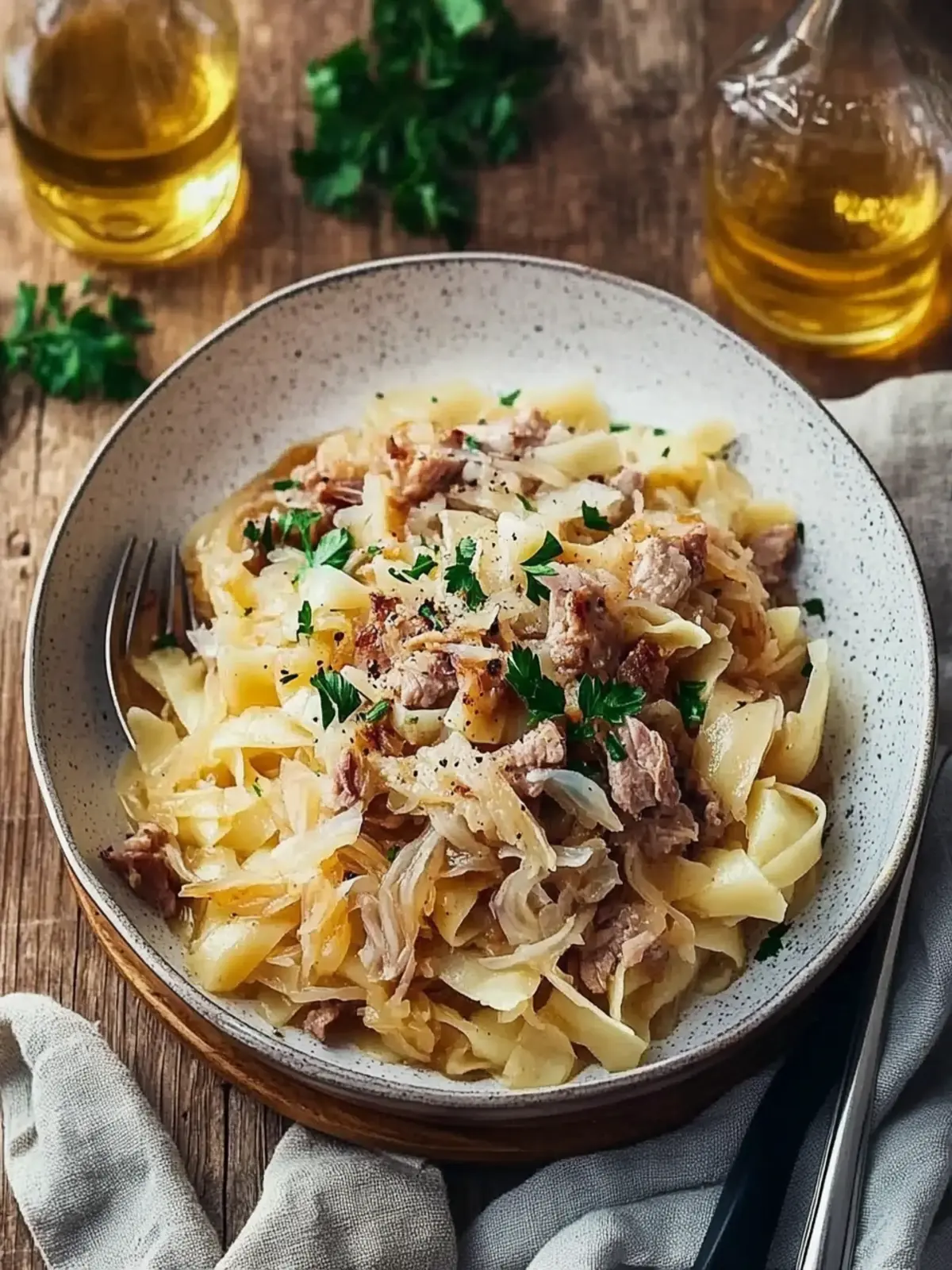
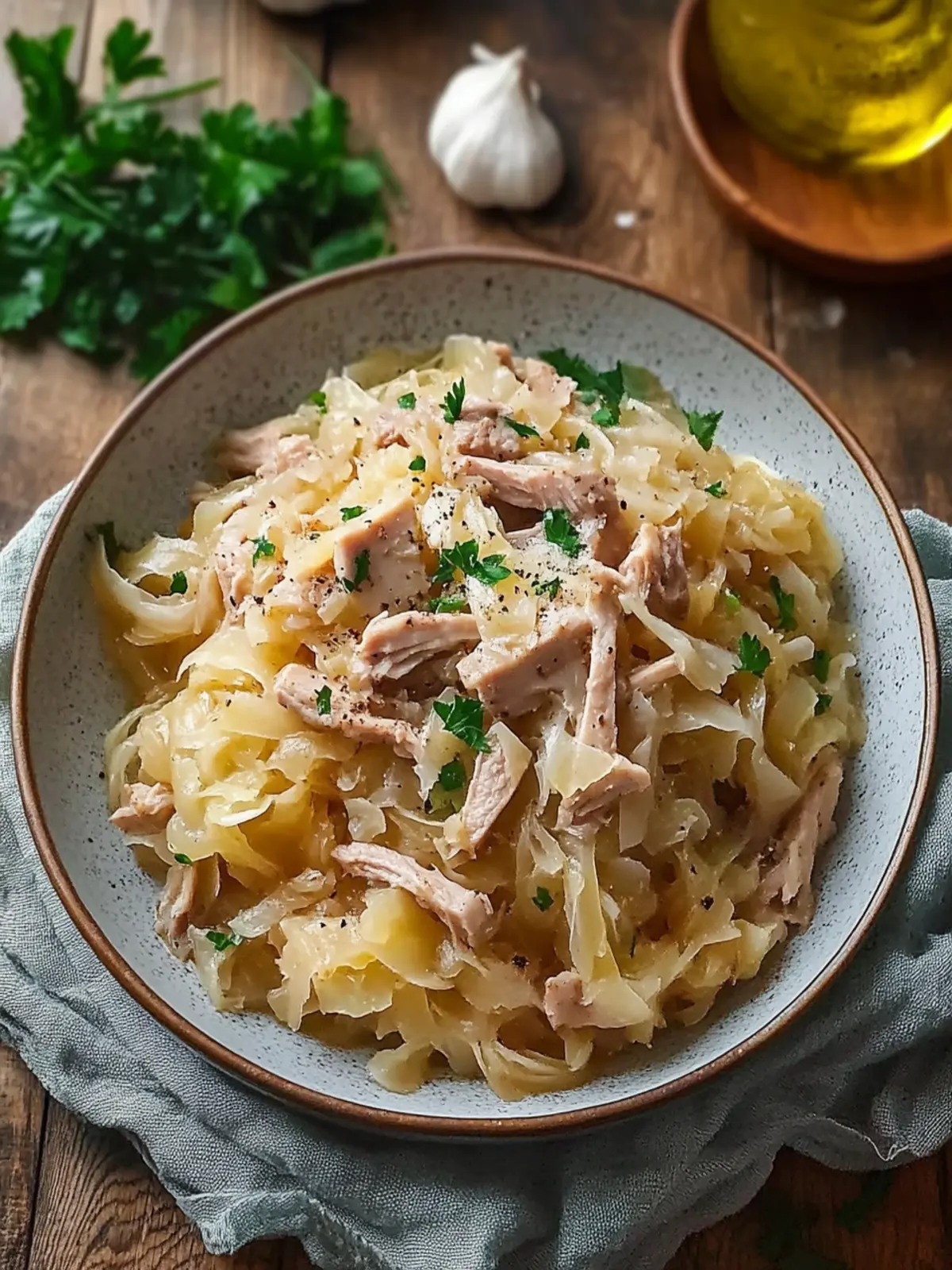
As I stood in my kitchen, the comforting scent of cinnamon and garlic enveloped me, evoking cherished memories of cozy family dinners. On those nights, my loved ones would gather around the table, eagerly waiting to dig into a hearty meal that felt like a warm embrace. This One-Pot Tender Pork Sauerkraut and Noodles dish captures that essence, blending juicy, braised pork with the tangy kick of sauerkraut and buttery noodles. Perfect for any busy weeknight, you’ll find that this simple yet flavorful recipe requires minimal effort, leaving you more time to enjoy those moments together.
With just a handful of ingredients and a bit of patience, you can create a classic comfort food that’ll have everyone feeling nourished and satisfied. So, let’s dive into this delightful mix of textures and tastes that’s sure to become a beloved staple in your home!

Why will you love German Pork Sauerkraut and Noodles?
Simplicity at Its Best: Creating this dish is a breeze—just one pot and minimal prep time make it perfect for busy nights.
Rich, Bold Flavors: The melding of tender pork, tangy sauerkraut, and buttery noodles results in a flavor explosion that warms the soul.
Family-Friendly Appeal: With its comforting taste and hearty ingredients, this recipe is sure to be a hit with everyone at the table.
Make-Ahead Convenience: Prepare it in advance and let the flavors deepen; it tastes even better the next day!
Versatile Variations: Swap sauerkraut for kimchi or throw in veggies—there’s endless room for personalization.
Crowd-Pleasing Delight: This dish is not just a meal; it’s a gathering experience, evoking cozy memories and inviting connections.
German Pork Sauerkraut and Noodles Ingredients
• Here’s everything you need to create this cozy comfort food!
For the Pork and Braise
- Pork Loin Roast – A lean cut that yields tender meat; pork shoulder can be used for a richer flavor.
- High-Heat Oil – Essential for searing; avocado oil works wonders due to its high smoke point.
- Salt & Pepper – Key seasoning to enhance every flavor; freshly ground black pepper introduces a robust aroma.
- Sauerkraut – Delivers tangy punch; remember to drain well to avoid a watery dish. You can swap it with kimchi for a different flavor twist!
- Chicken Soup Base – Boosts the depth of flavor in the braising liquid; homemade chicken broth makes a fresh alternative.
- Brown Sugar – Balances out the acidity of sauerkraut; tweak the amount based on its tanginess.
- Garlic – Infuses a lovely aroma and taste; finely mince for even distribution.
- Apples – Adds sweet and tart notes; firm varieties like Granny Smith blend beautifully.
- Onion – Offers sweetness and depth; choose yellow or white for the best flavor.
For the Noodles & Garnish
- Egg Noodles – Serve as the hearty base; cook just until al dente for optimal texture. Gluten-free noodles work too!
- Unsalted Butter – Adds rich flavor to the noodles; you can replace it with olive oil for a dairy-free option.
- Fresh Parsley – A sprinkle not only brightens the plate visually but also adds freshness.
Now that you have your ingredients ready, you’re one step closer to enjoying the delightful flavors of German Pork Sauerkraut and Noodles!
How to Make German Pork Sauerkraut and Noodles
-
Prepare the Pork: Allow the pork loin roast to sit at room temperature for 15-20 minutes, ensuring even cooking during searing. This extra step will make a noticeable difference in tenderness.
-
Prep Ingredients: While the pork warms up, drain the sauerkraut well to eliminate excess moisture. Slice your apples, dice the onion, and finely mince the garlic—all essential for flavor!
-
Season and Sear: Generously season the pork with salt and pepper. Heat your oil in a Dutch oven over medium-high heat and sear the pork for about 4 minutes on each side until it’s beautifully browned.
-
Sauté the Aromatics: Remove the pork and add the diced onion to the pot. Sauté until softened, then stir in the minced garlic, cooking briefly until fragrant—this should take about 1 minute.
-
Combine Ingredients: Add the drained sauerkraut, sliced apples, brown sugar, chicken soup base, and a bit of water, mixing everything well to combine. Allowing these flavors to meld is key!
-
Braise the Pork: Return the seared pork to the pot, nestling it into the mixture. Cover and place it in your preheated oven at 325°F for 1.5 hours, or until the pork is fork-tender.
-
Cook the Noodles: About 10 minutes before the pork is done, prepare your egg noodles by following the package instructions— usually around 8-10 minutes. Drain and toss them with unsalted butter for that lovely richness.
-
Serve and Enjoy: Once the pork is ready, let it rest for a few minutes before slicing. Adjust the seasoning of the sauerkraut mixture if needed, then serve the sliced pork over your buttery noodles, generously topped with sauerkraut and a sprinkle of fresh parsley.
Optional: Add a drizzle of olive oil over the noodles for an extra touch of flavor!
Exact quantities are listed in the recipe card below.
Expert Tips for German Pork Sauerkraut and Noodles
-
Well-Drained Sauerkraut: Ensure sauerkraut is thoroughly drained to prevent extra moisture, which can make the dish soupy and less flavorful.
-
Room Temperature Pork: Letting the pork loin roast sit out for 15-20 minutes before cooking promotes even cooking and improves tenderness—don’t skip this step!
-
Proper Seasoning: Always taste the sauerkraut mixture before serving and adjust the sugar and salt levels accordingly; some sauerkraut can be tangier than others.
-
Rest the Meat: Allow the pork to rest for 10 minutes after braising. This simple step keeps it juicy when slicing.
-
One-Pot Wonder: Use a Dutch oven for this recipe; its excellent heat retention ensures even cooking, making your German Pork Sauerkraut and Noodles an absolute success.
-
Personalize the Dish: Don’t hesitate to mix in your favorite vegetables or swap sauerkraut for kimchi, keeping the essence of the dish while adding your personal touch!
What to Serve with German Pork Sauerkraut and Noodles?
Every great dish deserves a delightful companion to create a memorable meal experience.
-
Roasted Root Vegetables: A medley of carrots and parsnips, roasted to sweet perfection, balances the savory richness of the pork. The caramelized edges add a crunchy texture to each bite.
-
Cucumber Salad: A cool salad with crisp cucumber, sour cream, and fresh dill provides a refreshing contrast to the hearty flavors, ensuring your palate stays invigorated.
-
Applesauce: A spoonful of sweet applesauce enhances the dish’s apple notes while adding a luscious, smooth texture that complements the pork’s juiciness.
-
Homemade Rye Bread: Serve warm, crusty rye bread for a traditional touch. Its dense texture pairs perfectly for scooping up the sauerkraut and sauce, enhancing every bite.
-
German Beer: A light German lager or wheat beer harmonizes with the dish’s flavors, offering a crisp, refreshing contrast to the rich, savory elements.
-
Chocolate Cake: For dessert, a slice of moist chocolate cake can provide a sweet ending, with rich cocoa flavors balancing the tanginess of the meal. It’s a classic finish for a comforting dinner!
Make Ahead Options
These German Pork Sauerkraut and Noodles are ideal for meal prep, making your busy weeknights stress-free! You can prepare the pork and sauerkraut mixture up to 3 days in advance—simply follow the recipe up until the braising step, then cool, cover, and refrigerate. To maintain the dish’s quality, ensure it’s stored in an airtight container to lock in flavors. On the day you plan to serve, reheat the mixture on the stove until warmed through. Cook the noodles fresh while the pork reheats for that perfect al dente texture. This strategy allows you to enjoy the comforting taste of this dish with minimal last-minute effort!
Variations & Substitutions for German Pork Sauerkraut and Noodles
Feel free to make this cozy dish your own with these fun twists and swaps!
-
Spicy Kimchi: Replace sauerkraut with kimchi for a fiery kick, adding complexity to the flavor profile.
-
Sweet Potato Noodles: Use spiralized sweet potatoes instead of egg noodles for a gluten-free and slightly sweet alternative; they lend a delightful texture.
-
Different Apples: Try various apple varieties like Fuji or Honeycrisp for unique sweetness levels and flavor contrasts.
-
Vegetable Medley: Toss in chopped carrots or celery for added crunch and nutrition; they complement the other flavors beautifully.
-
Herb Infusion: Experiment by adding fresh herbs like thyme or dill while braising the pork for aromatic notes.
-
Creamy Base: Stir in a dollop of sour cream or Greek yogurt to the noodle mix for a creamy texture that’s pure comfort.
-
Mustard Kick: A teaspoon of Dijon mustard mixed into the sauerkraut brings a zesty tang further enhancing the overall flavor.
-
Maple Sweetness: Swapping brown sugar for pure maple syrup can add a unique sweetness and depth to the dish.
How to Store and Freeze German Pork Sauerkraut and Noodles
Fridge: Store in an airtight container for up to 4 days. The flavors deepen as it sits, making it even more delicious on day two!
Freezer: For long-term storage, separate the pork and sauerkraut mixture from the noodles, then freeze them in airtight containers for up to 2 months.
Reheating: Thaw frozen mixtures in the fridge overnight for best results. Reheat gently in the microwave or on the stovetop, adding a splash of water if needed to maintain moisture.
Make-Ahead Tip: This dish is perfect for meal prep; you can prepare it in advance, letting the hearty flavors of German Pork Sauerkraut and Noodles shine through!
German Pork Sauerkraut and Noodles Recipe FAQs
What kind of pork is best for this recipe?
For German Pork Sauerkraut and Noodles, I recommend using a pork loin roast for its leanness and tenderness. If you’re looking for a richer flavor, you can easily substitute it with pork shoulder, which has more fat and can impart a deeper, juicier taste to the dish.
How long can I store leftovers?
You can store leftovers of German Pork Sauerkraut and Noodles in an airtight container in the refrigerator for up to 4 days. I often find that the flavors deepen and improve over time, making it even more delicious the next day!
Can I freeze the dish?
Absolutely! I recommend freezing the pork and sauerkraut mixture separately from the noodles. Place them in airtight containers and they will last for up to 2 months. When ready to enjoy, thaw in the fridge overnight and then reheat gently to savor that comforting taste again.
What should I do if my sauerkraut is too watery?
If you find that your sauerkraut is too watery, simply place it in a fine mesh strainer and let it drain thoroughly before adding it to the dish. This will prevent your final dish from becoming soupy. You can also press down on the sauerkraut gently with a spoon to help release extra moisture.
Is it safe for everyone? What about allergies?
When preparing German Pork Sauerkraut and Noodles, it’s essential to note that it contains gluten from the noodles and may not be suitable for those with gluten sensitivities. However, you can substitute the egg noodles with gluten-free noodles or even zoodles (zucchini noodles) for a lighter version. Always be mindful of guest allergies, especially to pork or any seasonings used.
How can I enhance the flavor of the dish?
To take the flavors of German Pork Sauerkraut and Noodles to the next level, consider adjusting the sugar amount based on the tanginess of your sauerkraut. Taste the mixture before serving and tweak as necessary. You can also add a splash of apple cider vinegar for extra zest or throw in some chopped carrots or celery for added nutrition and color!

German Pork Sauerkraut And Noodles: Cozy Comfort Awaits
Ingredients
Equipment
Method
- Prepare the Pork: Allow the pork loin roast to sit at room temperature for 15-20 minutes.
- Prep Ingredients: Drain the sauerkraut well and prepare the apples, onion, and garlic.
- Season and Sear: Season the pork with salt and pepper, then sear in a Dutch oven for about 4 minutes on each side.
- Sauté the Aromatics: Remove pork and sauté onion until softened, then add garlic.
- Combine Ingredients: Add sauerkraut, apples, brown sugar, chicken soup base, and water to the pot.
- Braise the Pork: Return pork to pot, cover, and bake at 325°F for 1.5 hours until fork-tender.
- Cook the Noodles: Prepare egg noodles according to package instructions, usually around 8-10 minutes, then toss with butter.
- Serve and Enjoy: Let the pork rest, slice, and serve over noodles with sauerkraut and parsley.